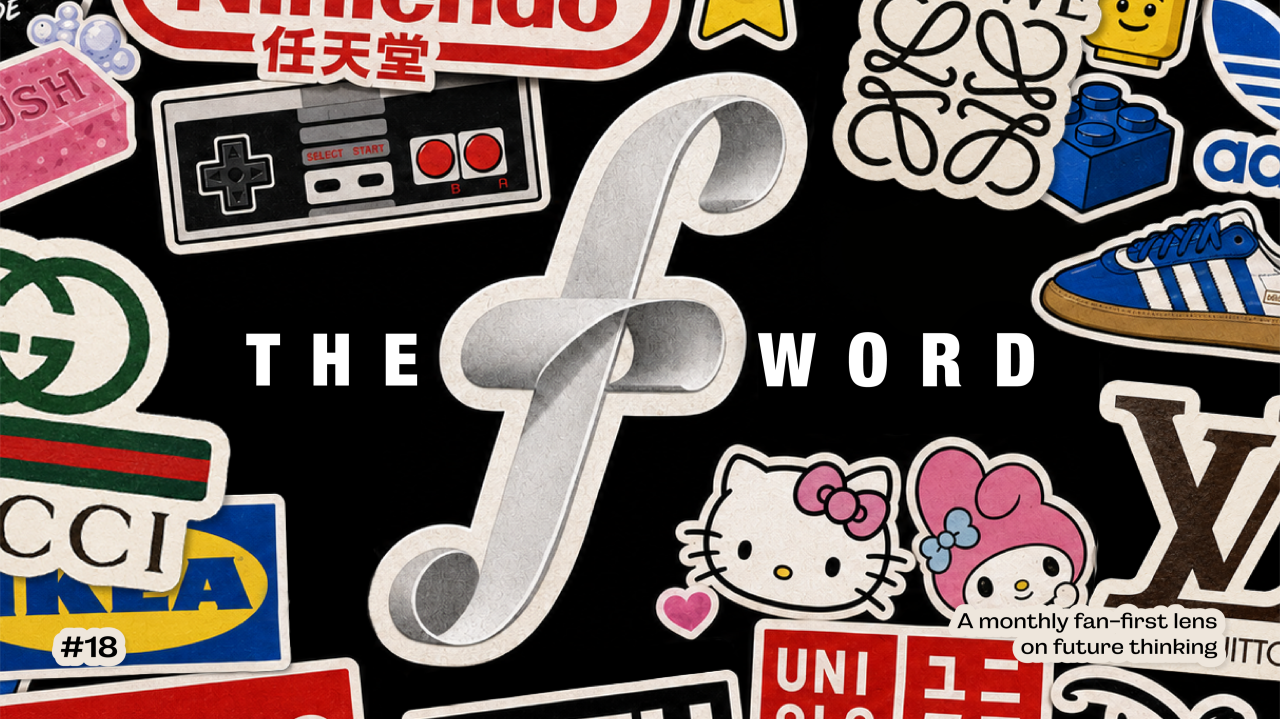
Brand collaborations are the favourite marketing shortcut to relevance. The unexpected pairing, the limited drop, the viral launch, all create the desired buzz. But here’s the uncomfortable question few brands ask: if no one comes back to your brand after the collab, did it really work?
In a fickle attention economy, there’s a race to be the most unexpected. The fastest sell-out. But fans are getting wise to it, 65% of brand fans say collaborations often feel like a marketing stunt (Household Fanalytics).
The hidden risk of modern brand collabs
Too many collabs are designed around reach, impressions, buzz and sell-through. Whether it’s celebrity tie-ups that go viral but don’t uplift long-term sales, limited-time drops that sell out but create no reason to stay, or a cultural moment that stretches so wide it loses meaning altogether.
Borrowed attention doesn’t always translate into brand growth.
The value gap is widening: many partnerships appear successful but quietly fail to grow an engaged audience long-term. 68% of consumers have bought a co-branded or special edition product (Mx8 Labs), but only 29% of respondents agreed that brand collabs add something genuinely new to their experience of a brand. Critically, even fewer, just 10%, said it would make them more likely to return to the brand. (Household Fanalytics).
If a partnership doesn’t change what people do next, whether they continue to choose you and engage with you – fandom rarely transfers.
In this month’s F-word, we ask what it takes for a brand collab to multiply your fandom beyond a drop.
The Future: Fan-fuelled collabs as a growth engine
The most powerful collabs don’t just combine logos, they unlock something new. Something fans couldn’t get from either brand alone. A new way to participate, a new reason to choose you, a more valuable role in their lives.
The brands creating lasting value from collaborations all have one thing in common: they’re designing for behaviour, not just buzz.
We see three ways to drive this kind of successful partnership:
1. Deepen fan behaviours: give fans something to do, not just buy
For 43% of our respondents, the appeal of a collab lies in whether ‘it reflects interests I already have’ (Household Fanalytics). Most brands treat overlapping interests as targeting signals, jumping onto cultural moments with logo badging.
Duolingo does the opposite: its collab strategy turns cultural moments into in-product experiences.
When Squid Games consumed global attention, Duolingo created a Korean learning experience to help fans deepen their obsession, resulting in a 37% increase in new learners in the U.S. (Duolingo, 2025).
When Bad Bunny was announced as the Super Bowl halftime performer, Duolingo launched Bad Bunny 101 within days to help fans feel more fluent.
Each move converted a cultural moment into deeper product engagement, a reason to open the app and start a streak.
2. Build habits, not spikes: train customers to expect discovery
The most valuable partnership strategies don’t just drive visits – they reshape customer expectations, turning a one-off visit into a habitual one.
Household client Target authors the enduring playbook on meaningful brand collabs, turning them into partnerships with deeper IRL retail experiences to fall in love with. From democratising design with Michael Graves back in 1999 to celebrating Pokémon’s 30th anniversary with Joe Jonas in 2026 – every visit reveals something new and brings more reasons to return.
That’s where brand loyalty and growth combine. Customers return not for a single drop, but because discovery has become an anticipated and expected part of the Target retail brand experience.
3. Solve unmet needs: expand how you show up beyond the category
The strongest collabs don’t just extend what you do, they expand how you deliver it.
Monzo’s partnership with Penguin on The Book of Money is a case in point. It unlocked formats that banks typically can’t access, from a real editorially credible book, to The Book Nook, a physical pop-up experience that brought the idea to life. Rather than publishing another financial guide, Monzo used the collaboration to turn everyday money goals into personalised stories people could create and share IRL. It transformed financial education from something instructional into something tangible people actively wanted to engage with.
The collaboration responded to a genuine unmet need – 74% of younger adults want banks to enable more honest conversations about money (Newcastle Building Society, 2025) – while deepening engagement with existing customers and creating a culturally relevant, lower-barrier entry point for new audiences. The book hit #1 Sunday Times bestseller within the first week of release, and exceeded sales targets by 150%, with their CMO noting sustained trust and consideration for Monzo (BBH; Creative Salon).
The bottom line
Attention is a table stakes KPI. If you’re not building behaviour, you’re just renting audiences.
The brands compounding the most value from partnerships right now are the ones treating collabs as growth infrastructure: designed to build new habits, deepen engagement, and unlock broader roles in people’s lives. The partnership between branded products, IP and retailer brands has never been more important.
At Household, we help brands build and multiply their fandoms, not just borrow them. Whether its developing new product partnership experiences and formats, or injecting more valuable moments into customer journeys to extend your brand world into adjacent categories and cultural spaces – this strategic and creative approach will expand relevance, demand and growth.
If you’re thinking about your next collaborative partnership strategy and want to build brand experiences that lasts longer than the hype cycle, we’d love to talk.